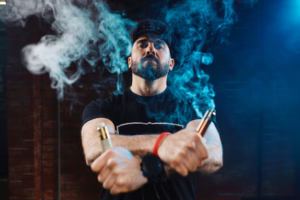

The question sounds like it might have a Texas-specific answer. It doesn’t. Whether you board at IAH, Hobby, Dallas Love Field, or Austin-Bergstrom, the moment you step onto a commercial aircraft, federal law takes over. State law stops at the gate.
So: can you vape on a plane in Texas? No — and the consequences for trying are significantly worse than most people realize.
Here’s the full picture.
Federal Law Governs Commercial Flights — Not Texas Law
The FAA (Federal Aviation Administration) prohibits smoking and vaping on all commercial flights operating in the United States, regardless of the state you depart from. This has been the rule since 2000 when the FAA extended its smoking ban to cover e-cigarettes and vaping devices.
Texas has no authority to create exceptions to this. Flying out of Houston doesn’t give you Texas-specific vaping rights in the air. The moment the aircraft door closes, you are operating under federal jurisdiction.
What Happens If You Vape on a Plane
This is where people underestimate the severity. The common assumption is that vaping on a plane gets you a stern talking-to from a flight attendant. The reality in 2026 is considerably harsher.
FAA fines. The FAA can issue civil penalties of up to $43,658 per violation for unruly passenger behavior — and a single vaping incident can generate multiple violations. Refusing a crew member’s instruction to stop vaping escalates immediately from a smoking violation to interference with flight crew, which carries its own separate penalty tier.
Real-world examples. A passenger who drank, vaped, and refused crew instructions on a domestic flight was fined $17,000 by the FAA. Airlines have successfully pursued restitution orders exceeding $38,000 from passengers whose behavior forced flight diversions. These are not theoretical maximums — they are documented outcomes.
Criminal referral and arrest. Beyond fines, passengers who vape mid-flight can face criminal referral and arrest upon landing. Airlines also maintain their own bans and can permanently prohibit passengers from future travel.
The bathroom myth. Many people assume the airplane lavatory is a workaround. It isn’t. Aircraft lavatory smoke detectors are calibrated to trigger on vapor — not just cigarette smoke. Vapor sets them off. When a lavatory smoke detector activates, it alerts the flight deck. The crew response to an in-flight smoke alarm is immediate and non-negotiable.
What TSA Does With Your Vape at the Checkpoint
TSA’s job is security screening, not drug enforcement. They are not specifically searching for vaping devices. A nicotine vape in your carry-on bag will pass through the X-ray with no issue — TSA agents see them constantly.
However, there are two specific situations where your vape becomes a problem at a Texas checkpoint:
1. It’s in checked luggage. This is a hard violation. The FAA prohibits all vaping devices and lithium batteries in checked baggage because a lithium battery fire in a cargo hold cannot be responded to by crew. TSA will confiscate the device and leave a notice in your bag. Depending on the situation, a fine may follow. Every device — disposables, pod systems, box mods, spare batteries — goes in carry-on only.
2. It contains THC oil. TSA is a federal agency. Texas has no legal recreational cannabis. If a TSA agent encounters a vape containing cannabis oil during a bag check, they are required to refer the find to law enforcement. At IAH and Hobby, that means Houston PD or Harris County Sheriff’s — both operating under Texas law. This is a meaningfully different outcome than flying out of a legal-cannabis state. The exposure is real.
Stick to nicotine vapes, pack them in carry-on, and you have zero issues at the checkpoint.
The 3-1-1 Rule for E-Liquid
If you travel with bottled e-liquid, the standard TSA liquids rule applies: containers must be 3.4 oz (100ml) or smaller, all fitting in a single clear quart-sized bag. This is the same rule that governs shampoo and contact lens solution.
One additional note for refillable tank users: empty your tank before you get to the airport. Cabin pressure changes during ascent cause tanks to leak even when sealed. An e-liquid-soaked carry-on bag at 35,000 feet is a preventable problem.
Charging Your Vape on the Plane: Also Prohibited
This catches people off guard. Plugging your vape into the USB port on your seat to charge mid-flight is prohibited under FAA regulations. Charging a lithium battery creates risk — the same reason devices can’t go in cargo holds. Charge your device fully before you leave for the airport.
What You Can Do: The Legal Version
You can bring your vape on the plane. You can have it in your bag, in your pocket, anywhere accessible in the cabin. You just can’t use it or charge it during the flight.
For most travelers, the practical solution is simple: vape before you go through security in the designated outdoor areas at IAH or Hobby, stow your device properly in carry-on, and pick back up after landing. For longer flights, a high-puff disposable you don’t need to refill makes the travel window much more manageable.
Bottom Line
| Question | Answer |
|---|---|
| Can you vape on a plane in Texas? | No — federal law, no state exceptions |
| Can you vape in the airplane bathroom? | No — vapor triggers smoke detectors, federal offense |
| What’s the fine for vaping on a plane? | Up to $43,658 per violation |
| Can you bring your vape on the plane? | Yes — carry-on only, never checked luggage |
| Can you charge your vape mid-flight? | No — prohibited under FAA regulations |
| What about THC vapes in Texas airports? | Serious legal risk — Texas law applies, TSA refers finds to local PD |
A to Z Smoke Shops carries travel-ready vapes for Houston flyers. Stock up before your next departure at atozsmokeshops.com.